Screening student film “Imagine� at the United Nations Convention to Combat Desertification: leveraging storytelling and film for environmental advocacy
Benedict Ballman, a class of 2025 Public Policy and Economics major, will be traveling to Riyadh, Saudi Arabia for the screening of the film  which he produced with fellow Vanderbilt students. The film will be premiered at the United Nations Convention to Combat Desertification COP16 and was made possible in partnership with the . Not new to producing short films, Benedict previously worked on the ÌìÃÀ´«Ã½¹ÙÍø student-led short
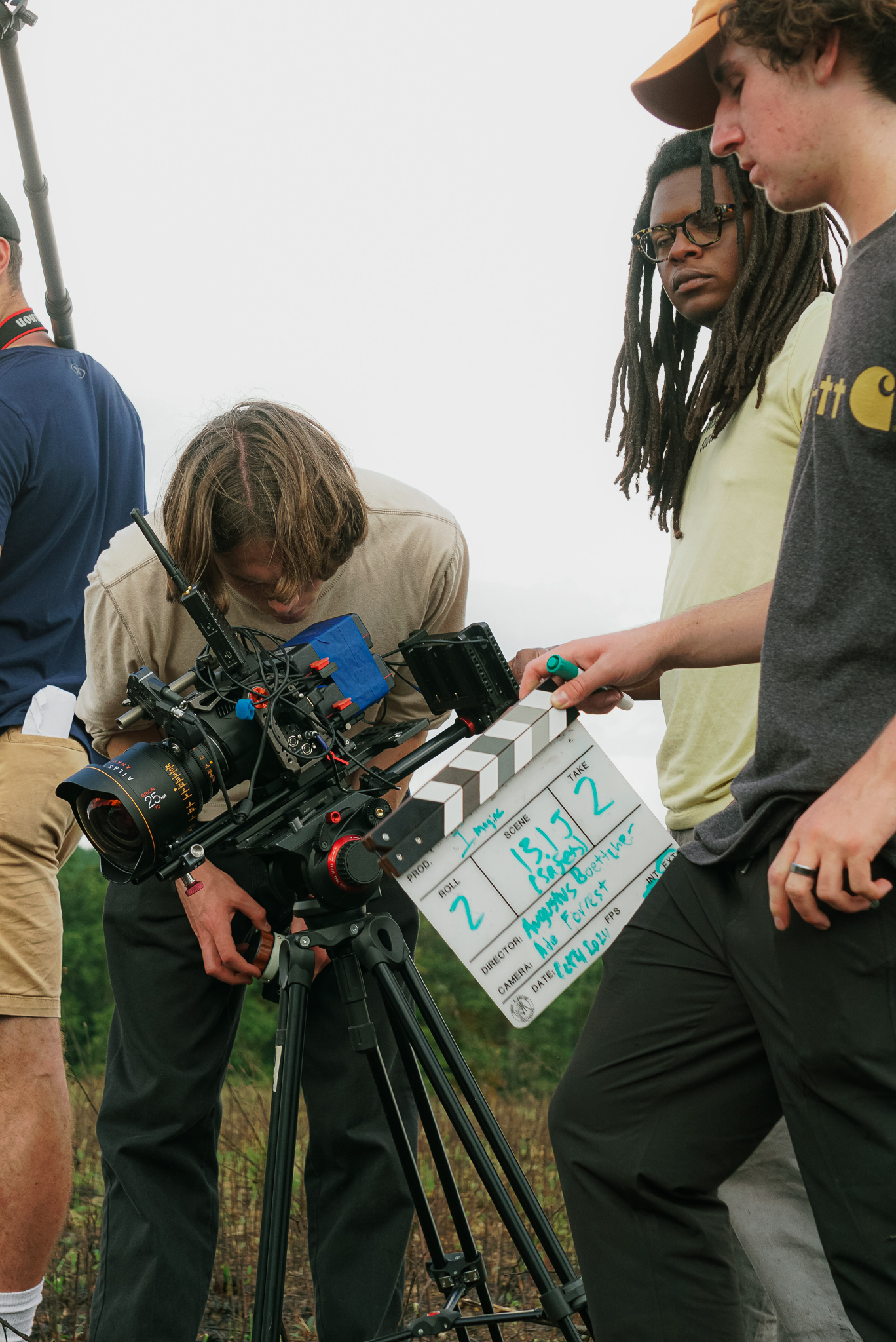
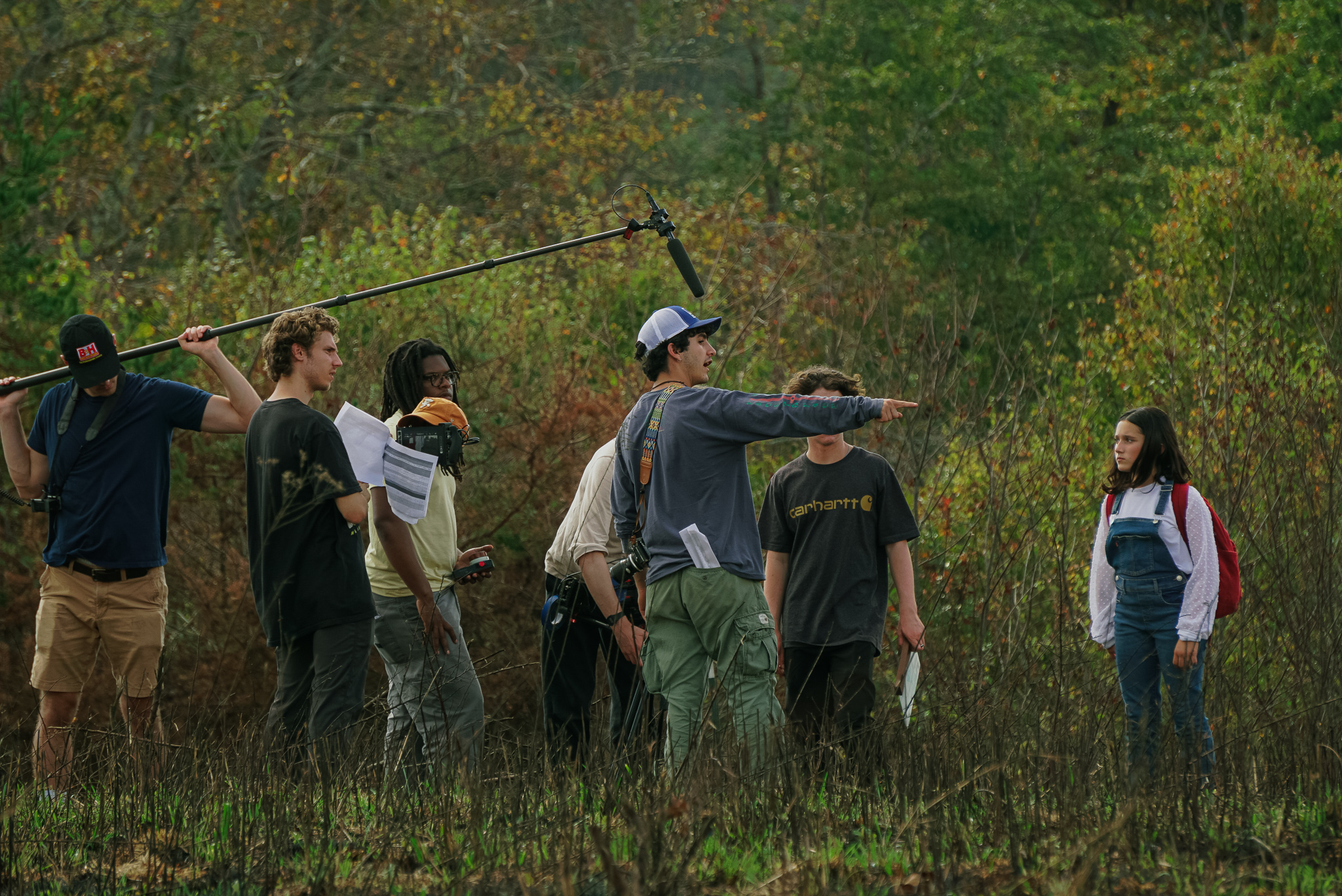
“Imagine� was created by an interdisciplinary team of Vanderbilt students—Benedict serving as the Executive Producer and Producer on the project—with backgrounds in film, computer science, theater production, and environmental advocacy. The production took place in Nashville, TN with AI-driven elements developed throughout post-production. The film follows four children from different regions of the world—the United States, Senegal, China, and Brazil—as they confront the environmental degradation affecting their homelands. With determination, they use technology and their imaginations to envision a flourishing future for their communities.
Claire Campbell (Office for Arts, Libraries & Global Engagement):To begin, tell me a little bit about yourself and this project.
   Benedict Ballman: I am an Executive Producer and the Producer of “Imagine.� This is a film made by Vanderbilt students under our Tomorrow in Focus non-profit organization. Our mission as an organization is to leverage storytelling and film to create a positive societal impact. “Imagine� is scheduled to screen at the United Nations Convention to Combat Desertification COP16 in Riyadh, Saudi Arabia, this upcoming December 2024, where I and nine other students will fly out to screen the film, speak on panels, and participate in discussion.
CC: What interested you in working with the United Nations Convention to Combat Desertification (UNCCD) and the G20 Land Initiative?
   BB: I was originally drawn to work with the UNCCD and the G20 Land Initiative because it offers the chance to address some of the most pressing global issues we face: land degradation, climate resilience, and sustainable development. I can bring youth voices to the forefront of international dialogue on these issues through this collaboration. Desertification and land restoration are crucial not just for the environment but for socio-economic stability, and I believe that young people, who will inherit these challenges, deserve a say in the solutions. The global platform of the UNCCD allows us to amplify youth perspectives and bring innovative solutions to critical problems.
CC: How has your time at ÌìÃÀ´«Ã½¹ÙÍø influenced the project?Â
   BB: Before ÌìÃÀ´«Ã½¹ÙÍø, I never had any functional film experience. However, Vanderbilt’s cultural emphasis on experiential learning has encouraged me to cultivate a community of filmmakers on campus, creating opportunities for myself and others to learn. Further, Vanderbilt has driven me to leverage my existing expertise in climate science, technology, and policy to develop the creative approach we are taking with our AI-driven storytelling. Through Vanderbilt’s resources, I’ve connected with faculty and students across disciplines, blending perspectives from environmental science, history, and computer science. The supportive environment has empowered me to bring this vision to life and utilize ÌìÃÀ´«Ã½¹ÙÍø’s strengths in research and innovation to create an educational tool that can engage youth globally.
CC: Whose collaborations have made this project possible?
   BB: This project is a collaborative effort made possible by partnerships with Danger Pixel VFX, Seismic Sound, Professors and , the UNCCD, the , the Curb Center, Vanderbilt’s Office of Immersion, and Tomorrow in Focus, a non-profit production house founded by me and other Vanderbilt students, providing both expertise and support this inaugural film. Their guidance, along with the input of our interdisciplinary student team, has transformed an ambitious idea into a real initiative that we hope will resonate internationally.
CC: Are there ways that the ÌìÃÀ´«Ã½¹ÙÍø community can support the project?
   BB: The ÌìÃÀ´«Ã½¹ÙÍø community can support the project by engaging with it at various levels. Students and faculty could join our discussions, offer insights, and even contribute to the AI and storytelling components. Additionally, helping us with visibility on campus and promoting the project at university events would be invaluable. Those interested in sustainability, technology, or public policy could volunteer or provide feedback, and faculty could mentor students involved.
Learn more about “Imagine� by visiting the . The film will be screening at the UNCCD COP16 in Riyadh, Saudi Arabia on December 9, see . Stay up to date with Tomorrow in Focus by following this non-profit film collective on .