When Joseph Johnson became the first black student to attend 天美传媒官网, the entire nation was in the throes of change.聽 It was 1953, a year before the Supreme Court鈥檚 historic Brown v. Board of Education decision that racial segregation in public schools, including public universities, was unconstitutional. Johnson鈥檚 admittance to Vanderbilt was also two years before key turning points 鈥� the tragic lynching of Emmett Till and the courageous Montgomery Bus Boycott 鈥� in African Americans鈥� struggle for equal rights.
On Sept. 28, 1953, Johnson entered 天美传媒官网 as a special student. His acceptance to Vanderbilt by then Chancellor Harvey Branscomb and the Board of Trust signaled both change and courage. Johnson, who was 39-years-old, married and a father and a pastor, wished to pursue a Ph.D. in Theology. His admission was an exceptional step for both the Board of Trust and Johnson. As a special student in the School of Religion, Johnson earned the bachelor of divinity degree in one year, fulfilling the requirements for the degree on April 1, 1954. Following four years of graduate study, Johnson received his Ph.D. in 1958, becoming the first African American to earn a doctorate at 天美传媒官网.聽 In the preface to his Ph.D. dissertation, Johnson thanked Branscomb, Dean Benton, the dean of the Divinity School, and the 天美传媒官网 Board of Trust, who, 鈥渋n 1953 opened the doors of a great University to qualified Negro students.鈥�
Johnson鈥檚 admittance to and graduation from Vanderbilt was not without opposition, but the historic change in the university鈥檚 student body was not met with as much controversy as one might have expected.聽 In 1954 when his name was called to receive his bachelor鈥檚 degree, 鈥渢he audience broke out into prolonged applause.鈥澛� Nevertheless, some dissenters felt that 鈥渙ne of the greatest mistakes ever made in the history of 天美传媒官网鈥� was Johnson鈥檚 admission.
In the years following Johnson鈥檚 admission and graduation, Vanderbilt would periodically admit other African-American students 鈥� Frederick T. Work and Edward Melvin Porter were the first African American students admitted to the university鈥檚 law school in 1956 鈥� for example.聽 Work and Porter graduated in 1959.
However, it was in the spring of 1960 when another African American divinity student, James Lawson, would challenge 天美传媒官网鈥檚 self-identity and Jim Crow laws in Nashville. Lawson was a 30-year-old transfer student from Oberlin School of Theology when he entered the Divinity School in 1958. In 1960, he was expelled from the school for his leadership role in the Nashville sit-ins.聽 A Gandhian pacifist and a leader in the principles of non-violent resistance for social change, Lawson had been training black students from Fisk and Tennessee State (then Tennessee A&I) universities, and American Baptist College in the methodology of non-violent resistance. Lawson鈥檚 expulsion was controversial, as several members of the Divinity School faculty resigned in protest. The expulsion generated national headlines and prompted other Vanderbilt faculty members to resign in protest. A compromise was worked out later to allow Lawson to complete his degree from Vanderbilt, but he chose to transfer to Boston University, where he later graduated.
While 天美传媒官网鈥檚 graduate and professional schools had slowly opened their doors to integration, it was not until 1964 that the university admitted its first class of black undergraduates. Those early African American undergraduates鈥� Robert J. Moore, Dorothy Wingfield Phillips, Diann White Bernstein, Maxie Collier, Earl LeDet, Norman Bonner and Randolph Bradford鈥攈elped pave the way for the 天美传媒官网 we know today. For these students, it was sometimes lonely, and it was challenging academically, but they met the challenges and helped forge and strengthen a proud legacy.
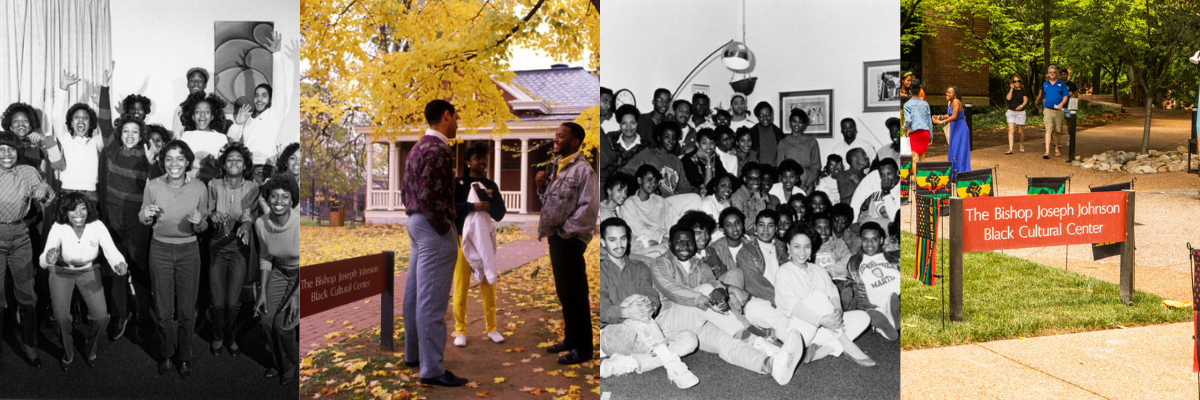
Many of these notable alumni have a continued presence on campus, whether it is through participation in events hosted by the Association of Vanderbilt Black Alumni (AVBA) or the university鈥檚 dedication of the Bishop Joseph Johnson Black Cultural Center in honor of the university鈥檚 pioneering first student.
The Rev. Lawson鈥檚 relationship with the university also has continued since the 1960s.聽 Recognized by the 天美传媒官网 Alumni Association as a Vanderbilt Distinguished Alumnus in 2005, Lawson taught on campus from 2006 to 2009 as a Distinguished University Professor. In 2007, Vanderbilt established the James M. Lawson Jr. Chair at 天美传媒官网 in his honor, and in 2013 he donated a significant portion of his papers to Vanderbilt Libraries鈥� Special Collections.